
Ecumenico: A Table Beyond Time
A fantasy dialogue across centuries — between faith, flavour, and friendship


by Elli Benaiah & Sanaa Boutayeb
Preface — October 2025
In October 2025, as the Middle East mourns and hopes, and relations between Jews and Muslims worldwide have been strained for generations, we offer this table to honour shared grief and dream of healing through food.
The land trembles with memory — Israel’s trauma after October 7, Gaza’s devastation, the fragile promise of ceasefire. When words divide and compassion feels scarce, perhaps food still knows how to speak.
We gather here — Jewish, Muslim, human — to cook, to listen, and to remember that coexistence is not a relic of history but a choice renewed at every meal.
Authors’ Note
“Ecumenico” imagines a table where Jews and Muslims — past and present — meet through food, philosophy, and memory.
To eat together is to speak to one another’s soul.
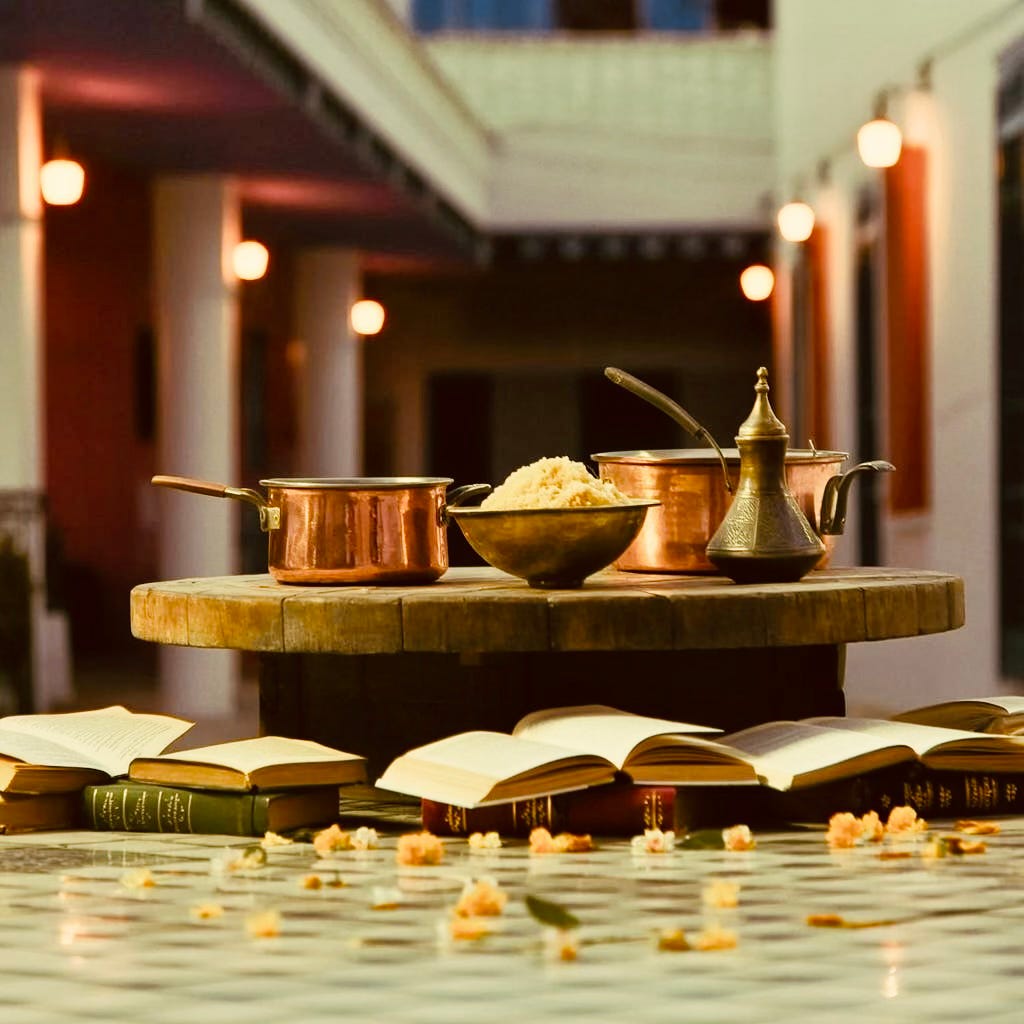
Opening Scene – 12th Century Córdoba
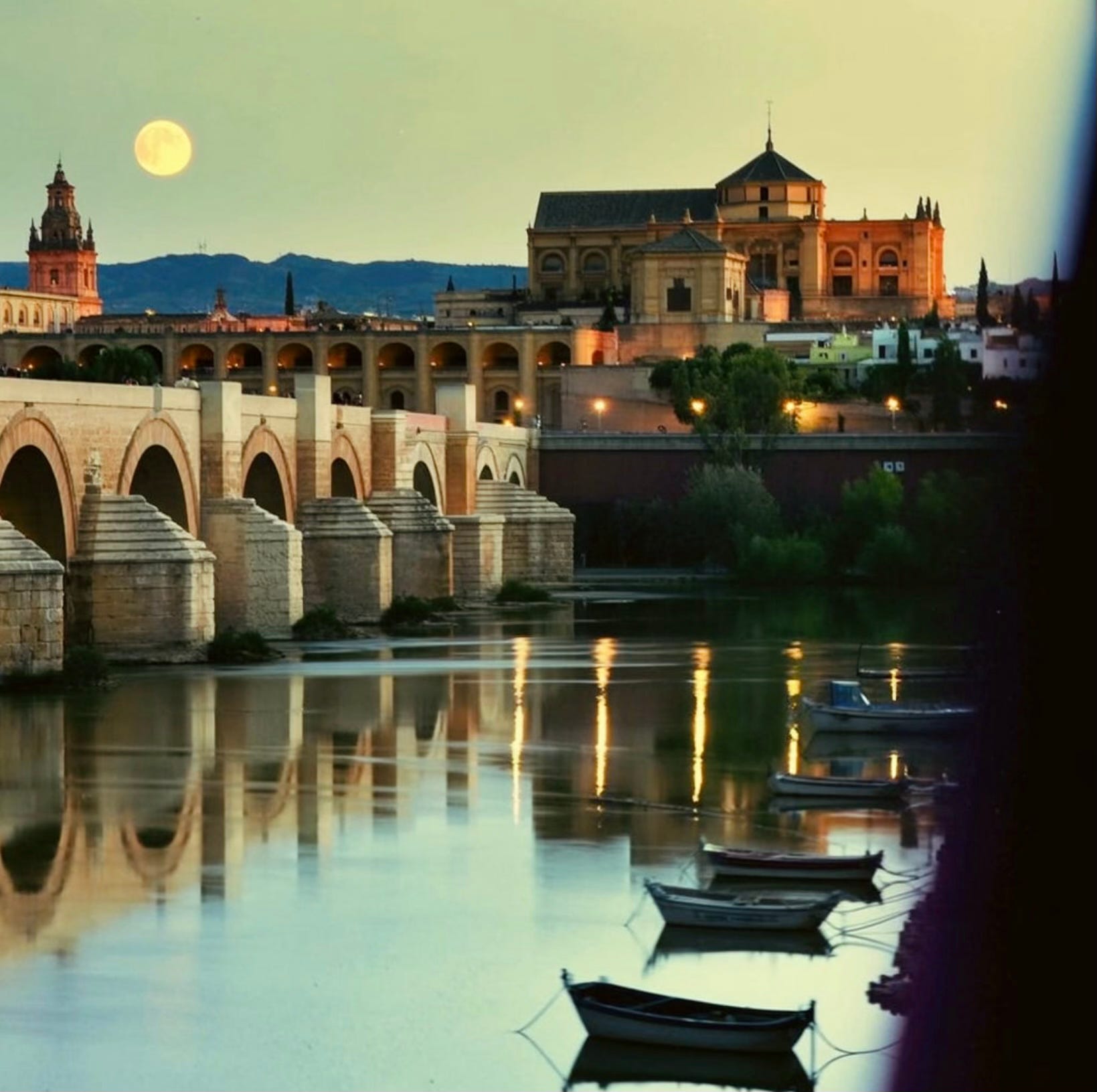
The Guadalquivir drifts beyond the walls, carrying the hum of merchants and students. In the courtyards, orange blossoms fall, their fragrance caught by warm Andalusian air.
Down a narrow side street, behind an unmarked door, a small courtyard kitchen glows with lamplight. Copper pots hang from hooks; the scent of cinnamon and smoke mingles with night jasmine.
Even here, among fire and spice, books remain, because philosophy refuses to leave. Tonight, a round wooden table is set beneath the open sky, and four of us gather under an invisible umbrella wide enough to cover centuries.
We call this meeting Ecumenico — not to erase our differences, but to sit long enough for food and words to cross the boundaries that history too often raised.
The Guests
Maimonides (Moshe ben Maimon, 1138–1204) — rabbi, physician, jurist and philosopher. Author of The Guide for the Perplexed, he sought to reconcile reason and revelation, law and life. For him, food is regimen and discipline; balance is the servant of the soul.
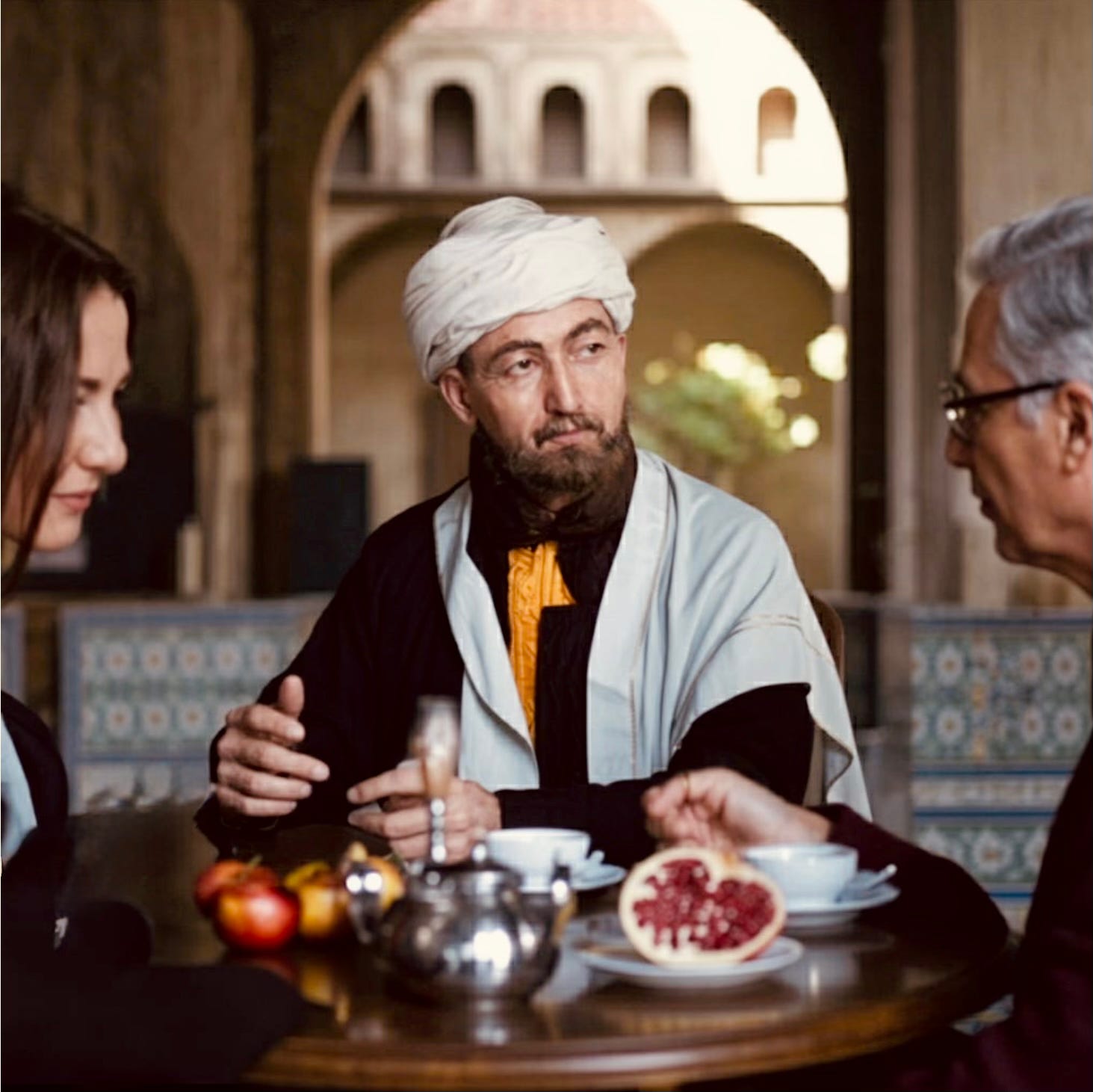
Averroes (Ibn Rushd, 1126–1198) — Muslim philosopher, jurist and commentator on Aristotle. He taught that reason and faith share one light, refracted through different lenses. For him, food is metaphor: spice as diversity, grain as reason, variety as truth.
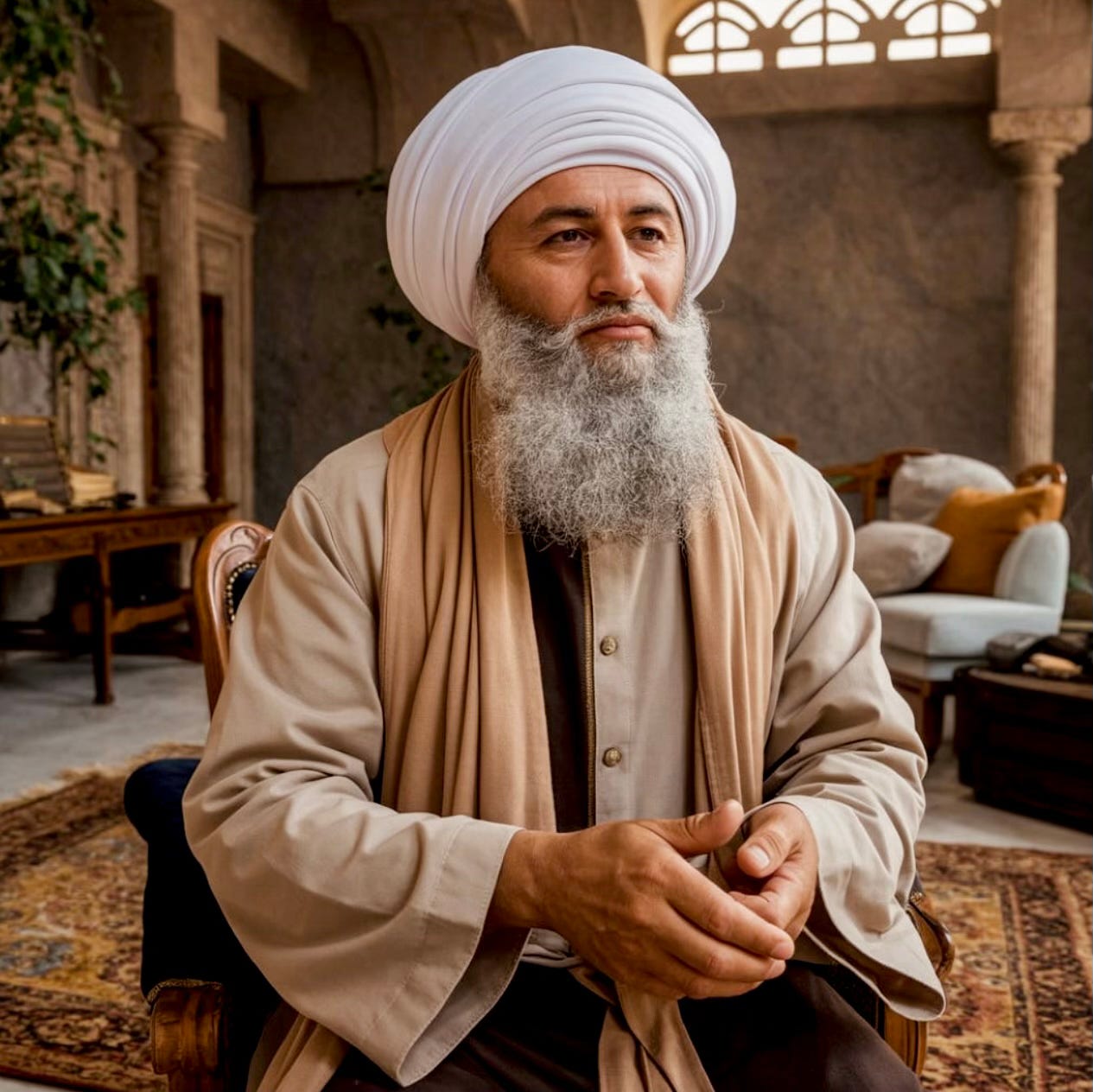
Sanaa (The Walking Palm ) —Moroccan Muslim, nomadic cook and writer. She carries preserved lemons and ras el hanout across oceans. For her, food is memory, culture, and coexistence.
Elli (Beyond Babylon) — Jewish writer tracing Baghdadi roots through India and Europe. For him, food is migration — turmeric and cardamom marking the roads of exile.
Between us sits a wide platter of couscous — golden, fragrant, piled with lamb, pumpkin and chickpeas, perfumed with saffron and cinnamon, sweetened with a touch of caramelised onions.
Beside it glows a bowl of matboucha — red, fiery, slow-cooked, shimmering with garlic and chilli.
One carries the warmth of North Africa; the other, the spice of Baghdad and Calcutta. Together they taste like exile remembered and home reinvented.
Ritual
Maimonides rises. From a copper ewer, he pours water over his hands and makes the traditional blessing.
“Purity before food is as vital as balance within it. The body must be fit, for without the body the soul cannot serve.”
Ibn Rushd nods.
“We too wash before meals — a reminder that reason, like the body, falters without discipline.”
Sanaa smiles.
“Water purifies more than the hands; it quiets the heart before the meal.”
Elli adds.
“I wash and think of travel and exile. Dust falls away; memory clings.”
Outside, the call to prayer fades; the city holds its breath.
“Purity before food is as vital as balance within it. The body must be fit, for without the body the soul cannot serve.”
The Ingredients
Maimonides:
“The pumpkin is gentle — moistening without burdening. Chickpeas sustain, but too many slow the stomach. Cinnamon warms; saffron inflames if excessive. Balance in food is balance in life.”
Ibn Rushd:
“Saffron is fire, cinnamon its shadow. Spice is like philosophy: it burns, but it illuminates. Truth appears when contrasts converse.”
Sanaa:
“I bring ras el hanout — warm, layered and lightly sweet, a blend of many spices that become one. It turns a simple meal into something alive. One spoon carries the sun of my Morocco into every dish. Spice is how memory learns to travel.”
“Elli listens, the scent of tomatoes and garlic waiting its moment.”
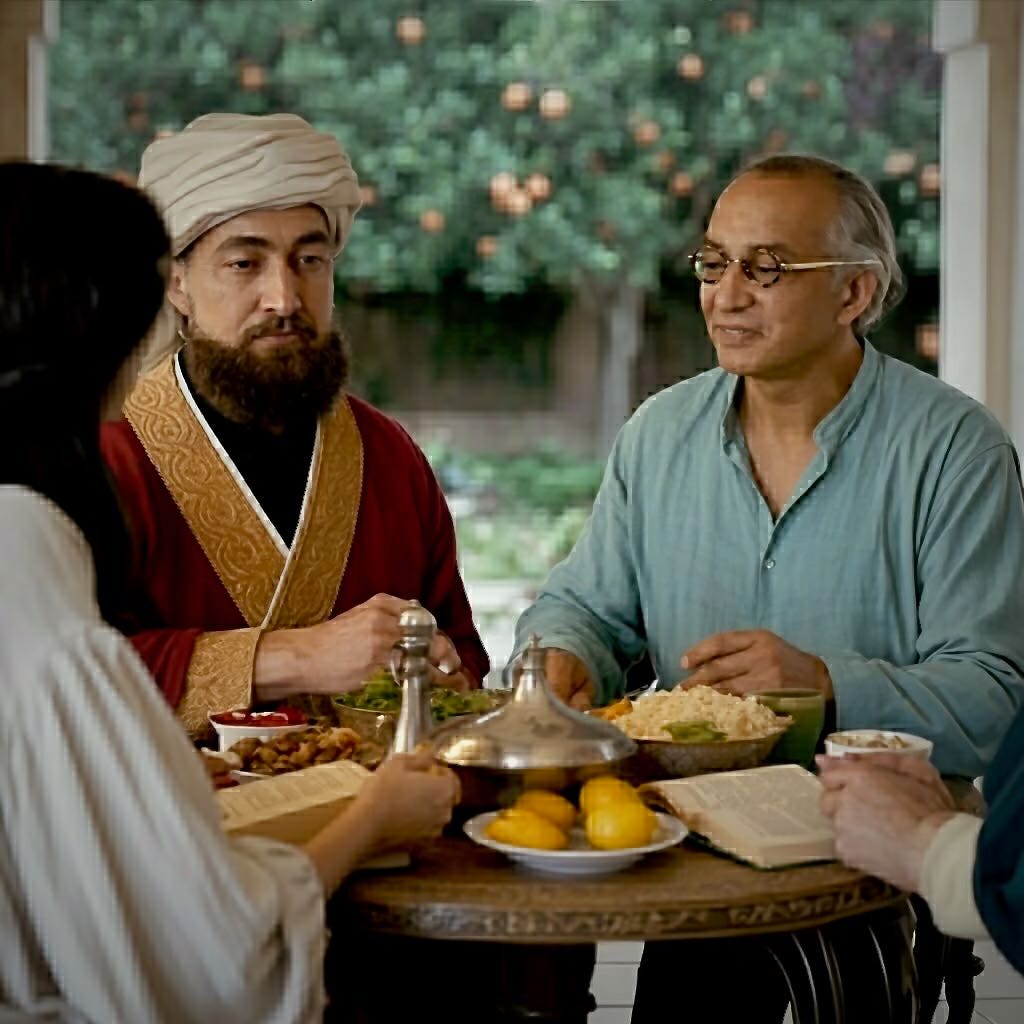
The Conversation
Ibn Rushd:
“Power silenced us once.”
Maimonides:
“Yet we found ways to speak again.”
Elli:
“And still we cook, to keep the dialogue warm.”
A moment of silence.
Maimonides:
“Excess destroys harmony. Too much spice, like too much desire, unsettles body and soul.”
Ibn Rushd:
“But restraint without daring is silence. Law without reason is as bland as couscous without stew.”
“Sanaa stirs the pot quietly; sometimes listening is the truest form of dialogue.”
Silence settles, broken only by the simmer of the stew.
Outside, the Guadalquivir flows on, carrying centuries with it.
Couscous and Matboucha
Sanaa:
“Humble and golden, couscous is as old as our two guests. Light as cloud and patient in its making, it gathers people in joy and in grief. Couscous is a dish that was born to be shared.”
Elli:
“And I bring matboucha — not my grandmother Ruby’s relish, for she made kasondi in Calcutta. In Israel I learned matboucha; now I make both in Munich, switching between fiery-sweet and fiery-savory. Garlic, chillies, tomatoes, turmeric — slow-simmered until sweet, hot, and thick. I prefer matboucha beside couscous; both begin as chaos and end in balance. Like our history.”
Sanaa:
“I steam mine three times, but what matters is that each grain stays separate, never drowned. It’s patience in edible form.”
Elli:
“In India there was no couscous. Rice took its place, but the form endured — grain below, stew above, balance between. Diaspora adapts; it never forgets. And with matboucha on the side, the meal sings east and west together — one grain, one spark.”
The Shared Meal
The stew is ladled onto the platter. Pumpkin melts into chickpeas; saffron stains the broth gold; cinnamon perfumes the air.
Beside it, the matboucha glows — red as sunset, a thread of spice binding memory to the present.
We lean in, eating together from the same dish — hands, spoons, silence, steam.
Maimonides gives thanks:
“We have eaten and are satisfied. Gratitude sustains more than food.”
Ibn Rushd replies:
“Eat of the good things, and give thanks.”
Sanaa:
“May this table linger in memory beyond tonight.”
Elli:
“The table is never permanent, but while it stands, it matters.”
The Recipes We Leave Behind
Sanaa’s Moroccan Couscous with Lamb, Chickpeas & Pumpkin
Serves 6 | Time ≈ 1 h 45 min.
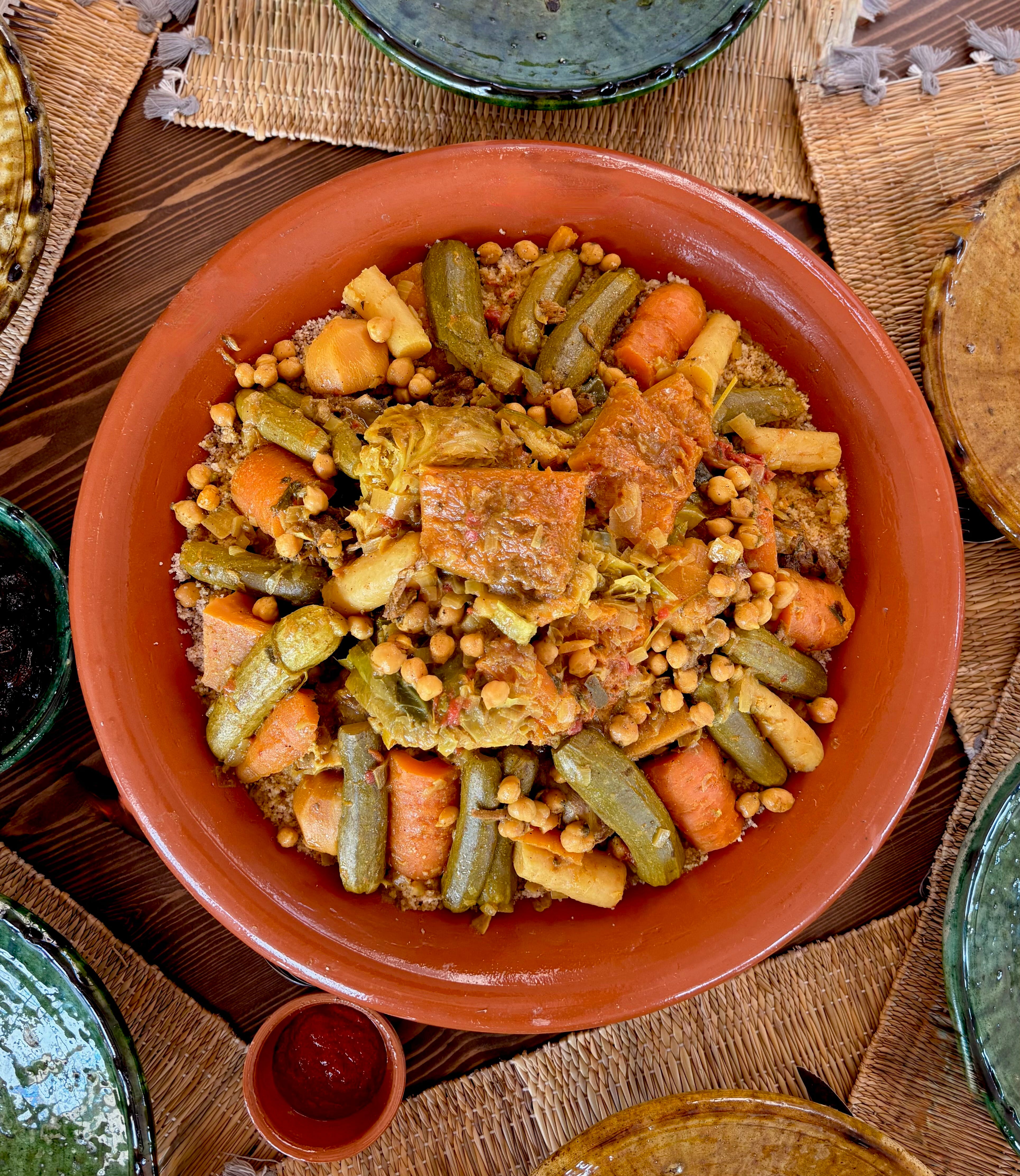
(See PDF for full recipe — this summary keeps main method and flavour profile consistent with Sanaa’s original two-pot recipe.)
Meat and chickpeas simmered with onions, ginger, ras el hanout, saffron and herbs.
Vegetables cooked separately in seasoned broth until tender.
Grains steamed three times for lightness; or the quick way.
Tfaya of caramelised onions and raisins crowns the dish.
Served as a pyramid: couscous at the base, meat in centre, vegetables and chickpeas above, and broth poured over.

Elli’s Matboucha (Spicy Tomato Relish)
A sweet-hot companion to couscous — fiery, rich, and red as sunset.
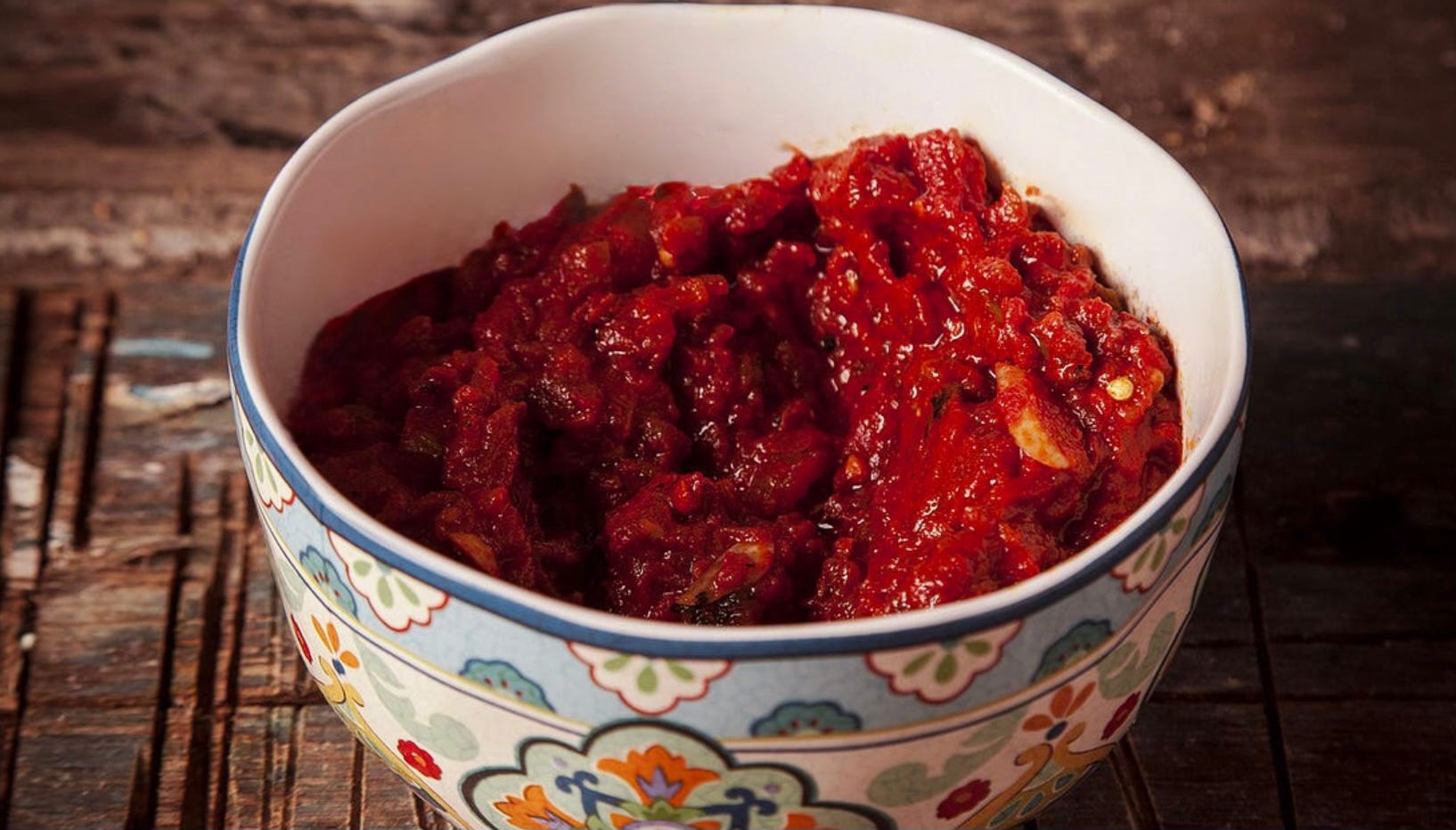
Elli’s matboucha — fiery, sweet, and savoury; a companion to couscous and conversation alike.
Ingredients
1 cup neutral oil (canola or corn)
20 garlic cloves, crushed
3 kg ripe tomatoes, peeled and chopped
1 tbsp salt
1 tbsp sugar
3 tbsp oil (for frying peppers)
4 green chillies, thinly sliced
2 tbsp hot paprika
1 tsp cumin
½ tsp turmeric
Method
Fry garlic gently in oil until pale gold.
Add tomatoes, salt and sugar; bring to a boil, then simmer 2 hours, stirring until thickened.
In a small pan, heat 3 tbsp oil; fry chillies and stir in paprika, cumin and turmeric.
Add this to the tomato pot. Cook 20 minutes more, until jam-like.
Cool. Serve alongside couscous or bread; it should glisten, never run.
Matboucha is a discipline of patience: the oil carries the heat, the slow simmer draws sweetness. Like a good conversation — it thickens as it deepens.
Download full recipe
Coda - A Call to Coexistence
This table never truly existed.
Maimonides and Ibn Rushd walked the same Córdoban streets but never dined together.
Both were exiled for their ideas — one a Jew driven from Almohad Spain, the other a Muslim cast out for daring to interpret Aristotle.
And yet tonight, in imagination, they sit with us — philosopher, physician, nomads, Jew and Muslim — in peace, at one round table.
We cooked this scene to life not for nostalgia, but for a fragile hope:
that cooking and eating together may still be a language of repair.
Host a meal. Steam couscous. Simmer matboucha.
Share a story. Listen. Mend.
Join us — cook, write, taste, or tell.
Let the table grow until every voice finds a place.
🕊️ If this table spoke to you, share it — that’s how our conversation grows.
To eat together is to speak to one another’s soul — and that language, at least, is still alive.
About the Authors
🌙 Sanaa Boutayeb — Warsaw-based Moroccan writer and nomad exploring memory, migration, and coexistence through food and story.
🕎 Elli Benaiah — Munich-based former criminal lawyer turned chef and food writer, whose project Beyond Babylon traces Jewish foodways from Baghdad to Shanghai.
Follow our work:
🌴 The Walking Palm
 | A guest post by
|
What began as two voices has become a single current of thought — flowing from Córdoba’s courtyards to our own kitchens. Writing this with you, Sanaa, felt like restoring a lost conversation between worlds that once understood each other through food, faith, and flavour — and perhaps, through words like these, might find each other once more.
Another excellent article. Bringing great minds together to share food and ideas was very creative. 👍